
Introduction
AI tools can write incredibly fast.
But speed is not the problem.
Quality is.
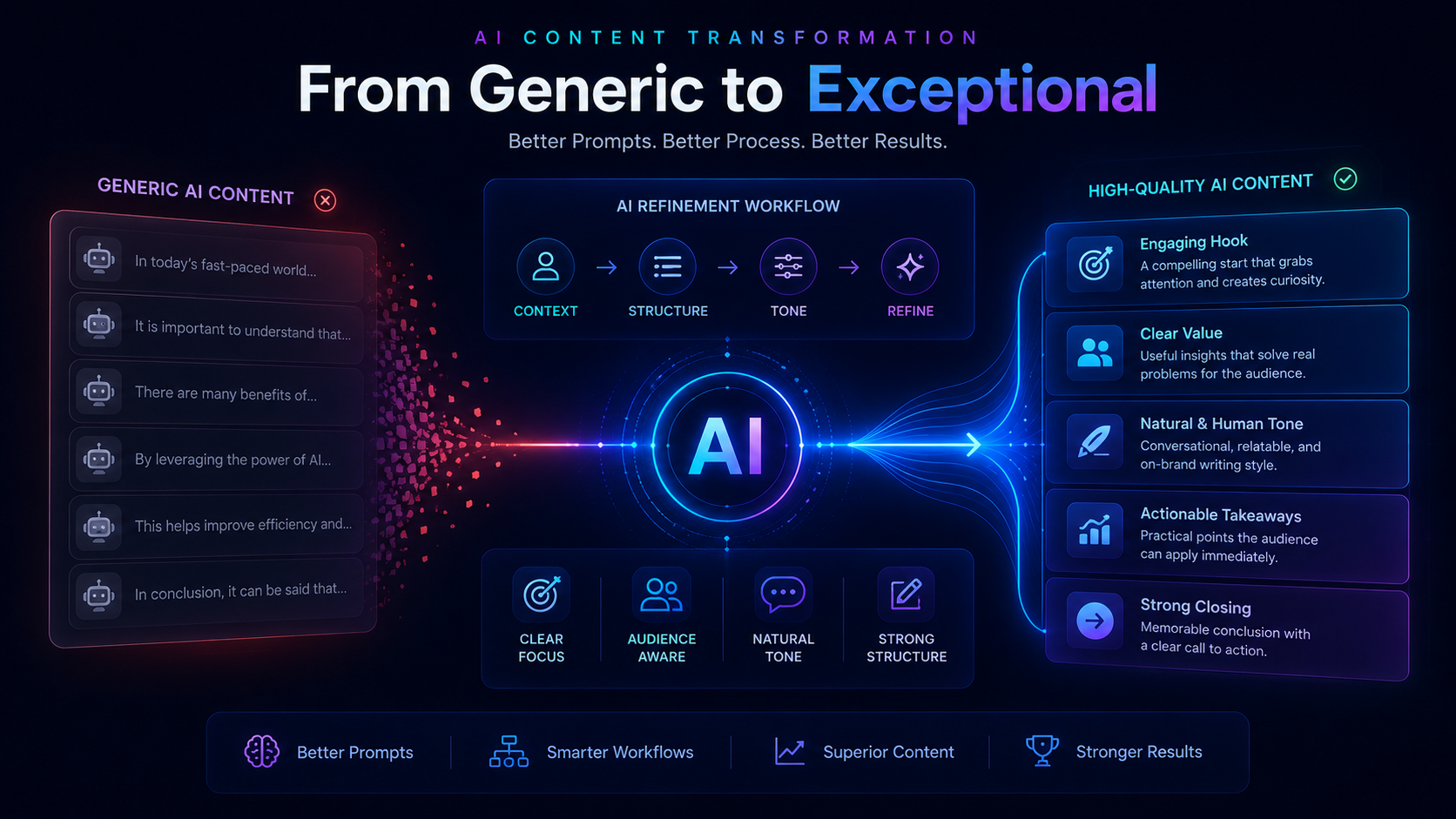
Most AI-generated content sounds:
- robotic
- repetitive
- vague
- generic
- over-polished
- emotionally flat
That’s why so much AI content feels instantly recognisable.
The issue usually isn’t the AI itself.
It’s the way people use it.
Why AI Content Starts Sounding the Same
Most users give AI extremely broad instructions.
For example:
“Write a LinkedIn post about productivity.”
That prompt contains almost no useful direction.
So AI defaults to generic patterns it has seen thousands of times before.
The result becomes:
- predictable hooks
- repetitive phrases
- weak opinions
- corporate language
- surface-level insights
AI is trying to complete the task.
But the task itself is too vague.
The Real Problem Isn’t AI
The real problem is usually:
- weak prompting
- lack of structure
- missing context
- unclear tone guidance
- no workflow system
Most people treat AI like magic.
They expect one prompt to produce finished professional content instantly.
That rarely works consistently.
Why Generic Inputs Create Generic Outputs
AI reflects the quality of the input it receives.
Generic prompts usually produce generic content.
Example:
Weak Prompt
“Write a blog introduction about AI.”
That instruction lacks:
- audience
- purpose
- tone
- angle
- positioning
So AI fills the gaps with generic assumptions.
What Better AI Users Do Differently
Better AI users give clearer direction.
Example:
Better Prompt
“Write a conversational blog introduction for small business owners explaining why most AI content sounds robotic. Keep the tone direct and slightly witty. Avoid corporate language.”
Now AI has:
- audience
- tone
- context
- objective
- positioning
That dramatically improves outputs.
Tone Is One of the Biggest Missing Pieces
Most users never tell AI how the content should sound.
Without tone guidance, AI defaults to safe professional writing.
That’s why outputs often sound:
- stiff
- formal
- unnatural
- emotionless
Simple tone instructions improve quality immediately.
Example:
- “Write casually.”
- “Avoid sounding corporate.”
- “Use short punchy sentences.”
- “Sound conversational.”
Small adjustments create major differences.
AI Performs Better Inside Workflows
One giant prompt usually produces inconsistent results.
Structured workflows perform better.
Instead of asking AI to:
“Write a full article.”
Break the process into steps:
- idea generation
- angle selection
- outline creation
- introduction drafting
- section writing
- tone refinement
- editing and cleanup
This improves clarity and consistency.
Human Editing Still Matters
AI should accelerate content creation.
Not replace thinking.
The best AI-assisted content still includes:
- human judgment
- positioning
- strategy
- editing
- brand voice
AI works best as an assistant.
Not an autopilot.
The Goal Is Usable Content
The goal isn’t to make AI write more words.
The goal is to create:
- clearer communication
- stronger ideas
- faster execution
- better workflows
- more consistent outputs
That requires systems.
Not random prompting.
Final Thoughts
Most AI content sounds generic because the prompts behind it are generic.
Better outputs usually come from:
- clearer instructions
- stronger context
- workflow structure
- better tone guidance
- iterative refinement
The people getting the best AI results are not necessarily using more advanced tools.
They are simply using AI more intentionally.
Want AI workflows that produce better outputs consistently?
Explore structured prompting systems and practical AI workflows at Promptozia.ai.